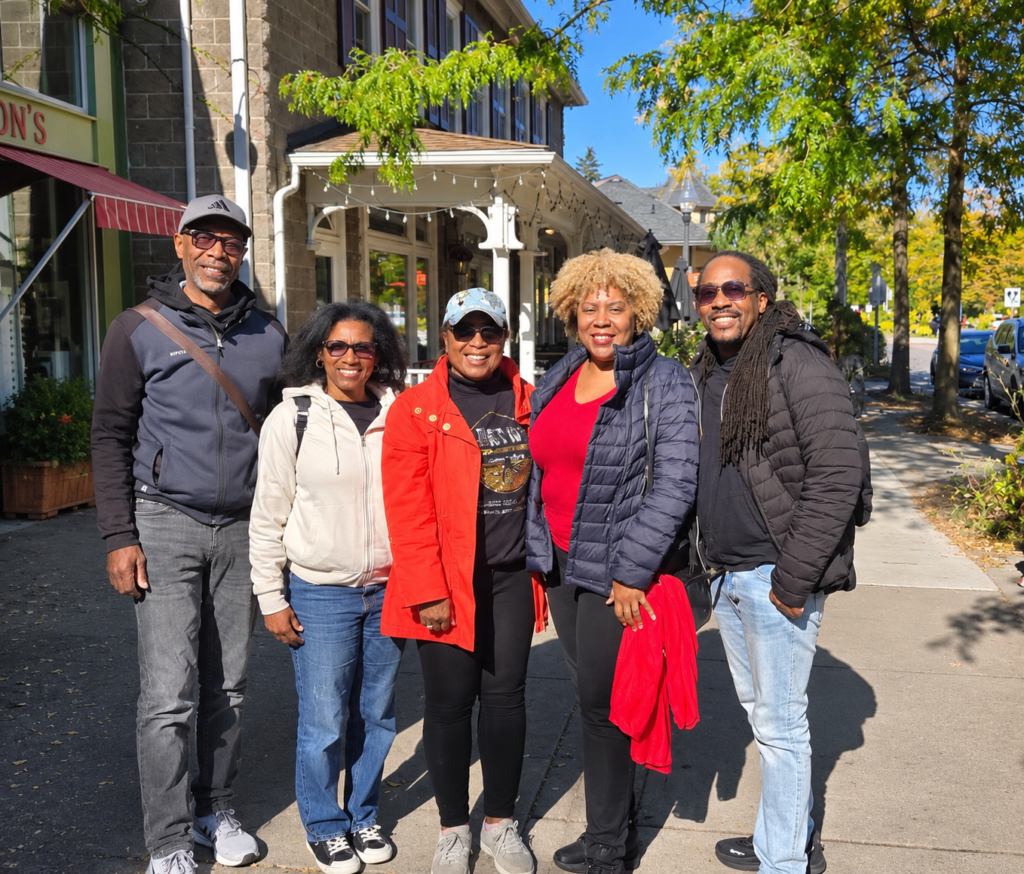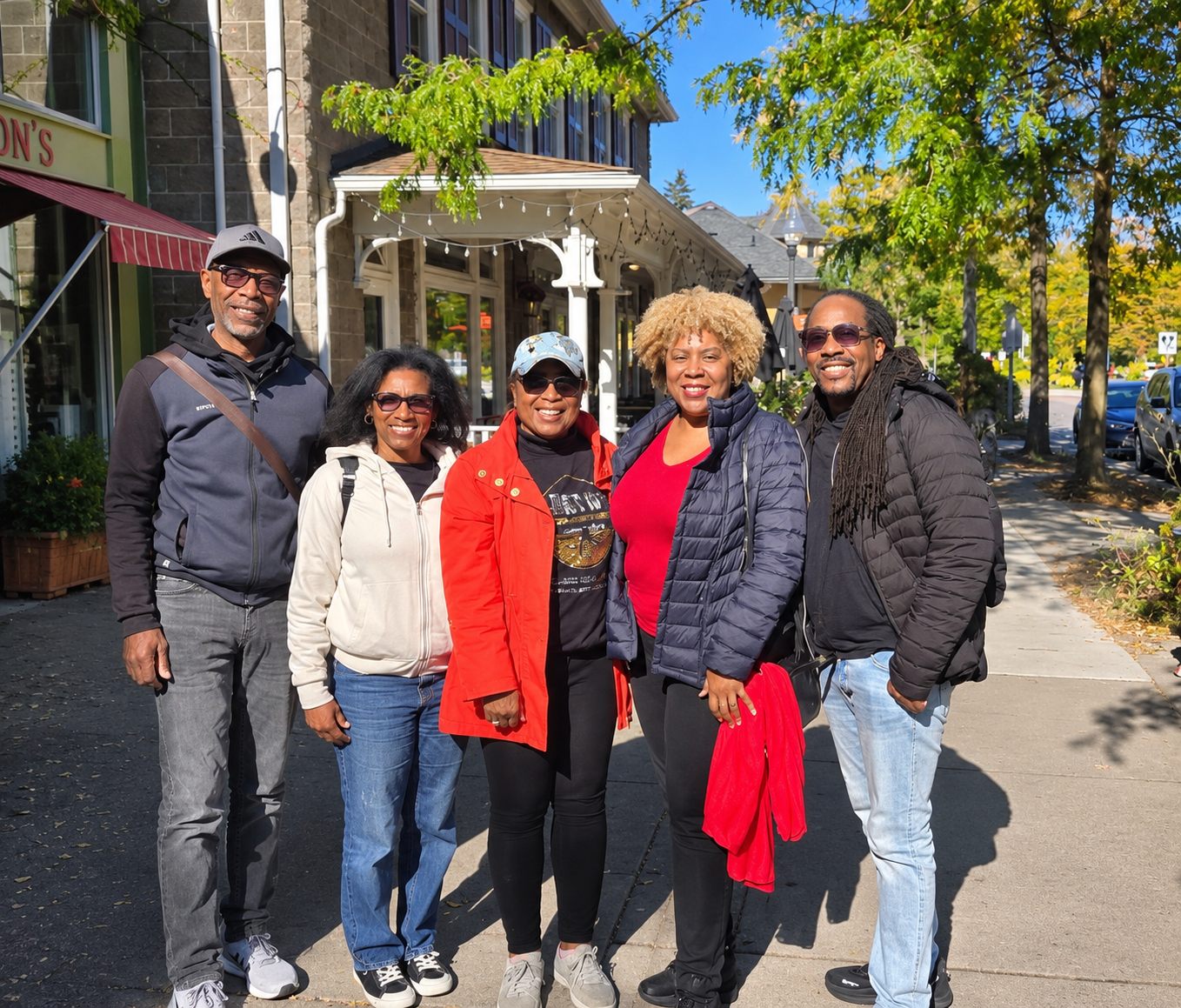
Harriet Tubman’s Canadian home, the communities freedom seekers built, and the birthplace of the Niagara Movement: what I learned on a private tour with Niagara Bound Tours, and how to plan your own.
Most people visit Niagara for the Falls, the wineries and the pretty streets of Niagara-on-the-Lake. Very few leave knowing that Harriet Tubman lived just down the road, or that the movement that became the NAACP held its first meeting on the Canadian side of the river.
If you’re a Black traveller heading to Niagara, this is the side of the region I want you to see. It changed how I saw a place I thought I already knew.
During my parents’ recent visit to Canada, I signed us up on a five-hour private Black history tour with Niagara Bound Tours. Here’s what we saw, whether I think it’s worth the money, and everything you need to plan the same experience.
Why I Chose Niagara Bound Tours
I had known about Harriet Tubman’s role in the Underground Railroad, including her connection to Canada. But most of what I had heard over the years focused on the American side of her story. I wanted to know about her life here, and what happened to the freedom seekers once they crossed the border.
Niagara Bound Tours is run by historian Lezlie Harper, a descendant of freedom seekers who travelled from Kentucky to Canada in 1851. She has been sharing Niagara’s Black history for more than 22 years, and she’s clear that her tours stick to accurate, authentic facts. Her aim is to inspire, and to celebrate those who came before us and how they were able to rise above.
That’s what sold me. I wanted to learn this history from someone whose own family is part of it, not from a script. Lezlie weaves her family’s story through every stop, which makes it far more than a drive between plaques.
Our private tour covered sites linked to the Underground Railroad, early Black settlement and the civil rights movement, in St. Catharines and Fort Erie. Here are the moments that stayed with me most.
Harriet Tubman’s Church in St. Catharines
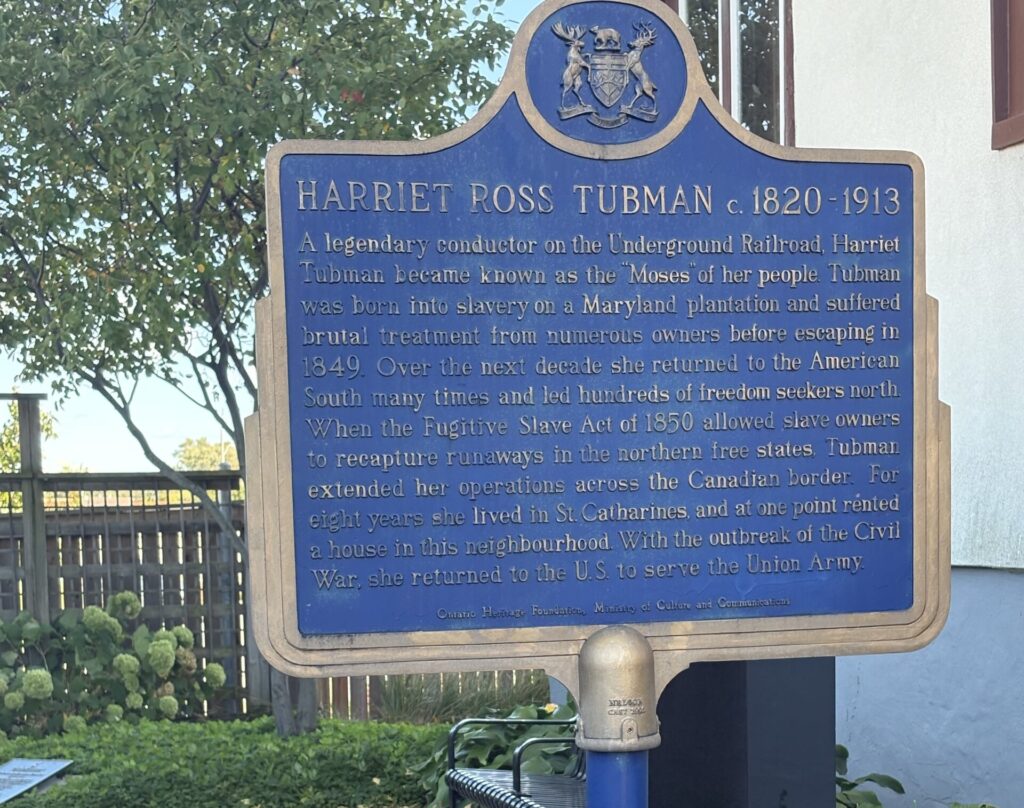
Harriet Tubman lived in St. Catharines from 1851 to 1862. For more than a decade, this small city was her home base, and the place she brought freedom seekers, including her own parents and brothers.
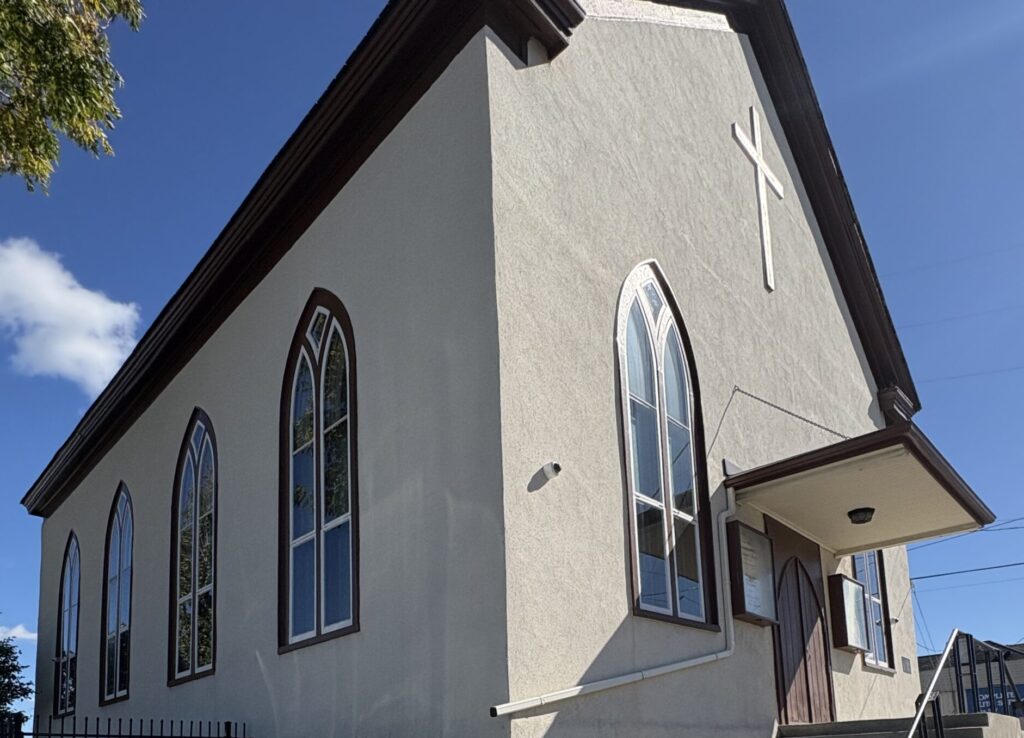
At the centre of that community was Salem Chapel, a British Methodist Episcopal church on Geneva Street where Tubman worshipped. Today it’s a National Historic Site.
Standing outside, reading the plaques and knowing Tubman had lived in this very neighbourhood made the history feel immediate. It’s a chapter of her life that rarely gets told.
My parents were surprised to learn that Tubman had guided people all the way to Canada. I already knew, but it wasn’t something my parents had heard. It made me realize how often the Underground Railroad is told as a story about escaping, with little said about what came after.
Black traveller tip: Salem Chapel only opens from time to time, so don’t count on going inside. If a tour bus happens to be visiting, you may get lucky. If not, you can still stop for photos and read the plaques on the property. Lezlie has spent a lot of time in Maryland, where Tubman was born, and works regularly with historians there, so you’ll hear Tubman’s story either way. You can check the Salem Chapel website for open times.
Fort Erie, Where Freedom Seekers Crossed and Stayed
Another part of the tour answered the question I had come with: what happened to Black people after they reached Canada?
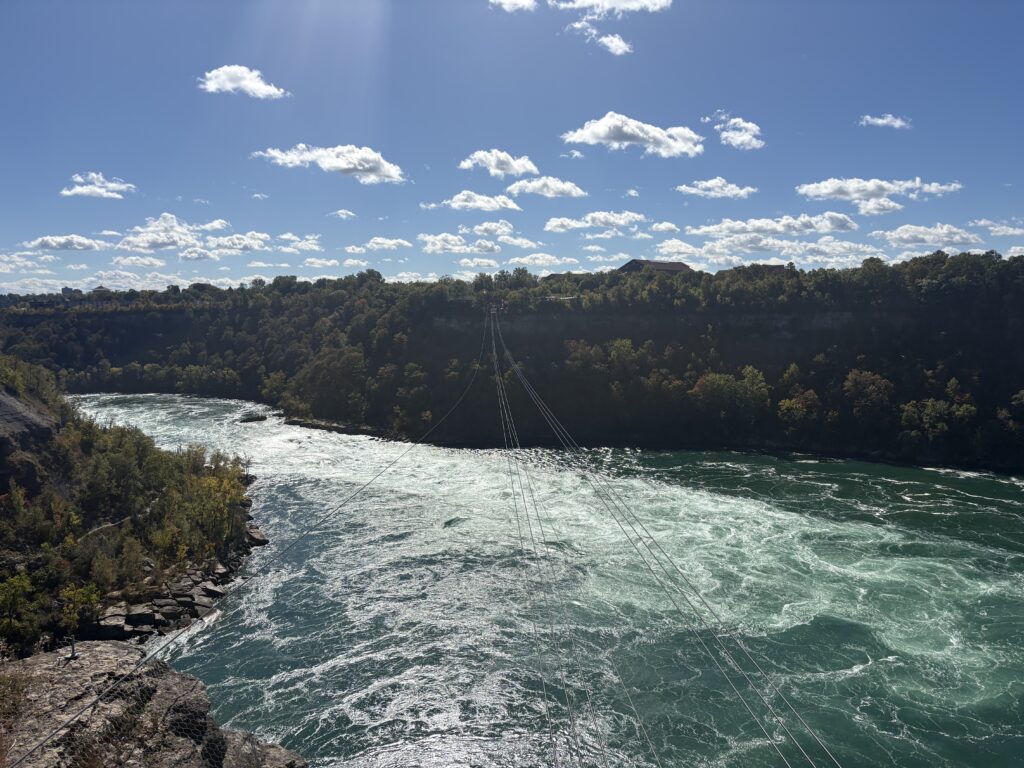
Fort Erie sits directly across the river from Buffalo, New York, which made it one of the busiest crossing points on the Underground Railroad. We visited Freedom Park on the riverbank and the historic Coloured Cemetery.
Standing by the water and looking across at Buffalo, I tried to imagine what reaching this shore meant after escaping slavery. But arriving didn’t mean the struggle was over. Black settlers still faced discrimination and hardship as they built homes, families and communities.
One conversation stopped me in my tracks. On a trip to Nova Scotia in 2021, I had learned that Black Loyalists who fought for the British were promised land, then often given plots too poor to farm. Lezlie described similar land struggles for Black settlers in Niagara.
I hadn’t realized these experiences echoed each other across Canada. It’s a reminder of how much Black Canadian history sits beyond the stories most of us are taught.
The cemetery was the most moving stop. It’s proof that Black people didn’t just pass through Niagara on the way to freedom. They stayed, and they shaped this region.
The Birthplace of the Niagara Movement
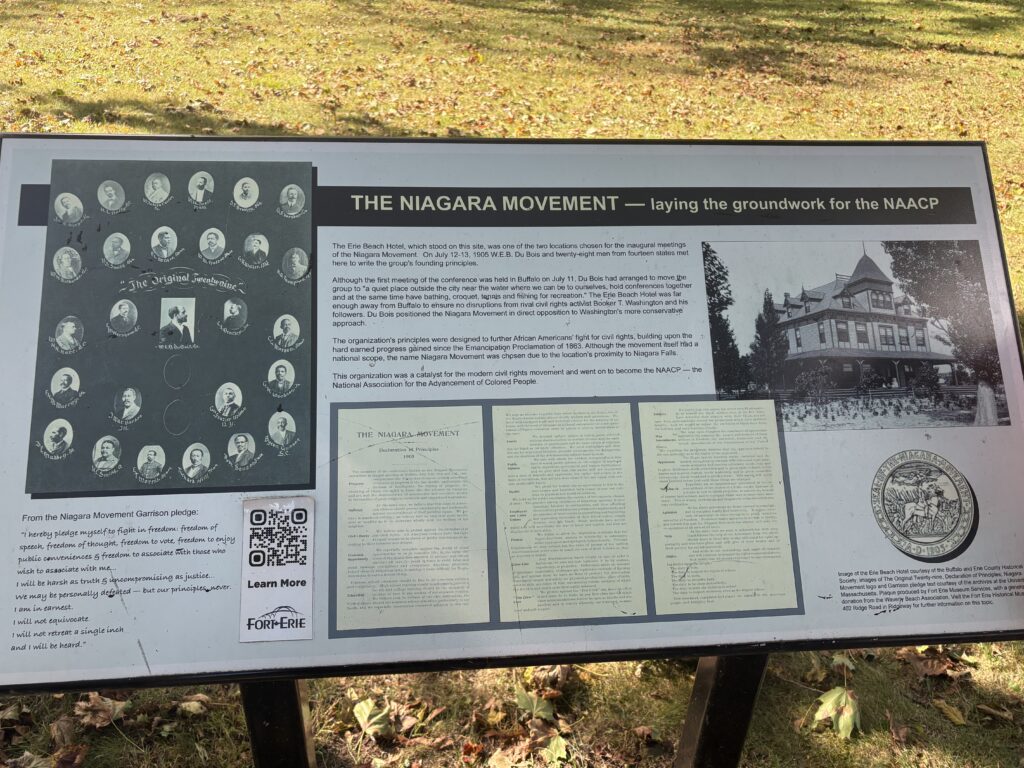
This was my biggest surprise of the day. In July 1905, W. E. B. Du Bois, William Monroe Trotter and other Black American civil rights leaders met at the Erie Beach Hotel in Fort Erie. That meeting launched the Niagara Movement.
The group demanded equal rights for African Americans at the height of segregation. Four years later, many of the same leaders helped found the NAACP.
I knew Du Bois’s name, but I had no idea this story ran through Fort Erie. Today a historical marker stands on the site of the old hotel on Helena Street.
It showed me that Black history in Canada and the U.S. is tied together well beyond the Underground Railroad. It reaches right into the fight for civil rights.
Is Niagara Welcoming for Black Travellers?
It’s often the first question we ask before booking anywhere, so here’s my honest take.
Every time I’ve visited Niagara Falls and Niagara-on-the-Lake, I’ve felt welcome, and the atmosphere has always been friendly.
As always, this is my experience, not a universal truth. But it’s a region I would happily recommend to other Black travellers.
Is the Tour Worth $150 a Person?
Yes, if you care about Black history and want depth rather than a quick photo stop. We paid $600 CAD for four adults, which is a real expense, but it covered five hours, transportation and a private guide.
What you’re really paying for is Lezlie. She is knowledgeable, passionate and generous with her family’s stories. We would never have got that driving between the sites ourselves.
It also worked for every generation in our group. My parents had come for the Falls and Niagara-on-the-Lake, and I had visited the region many times. Yet almost everything on this tour was new to all of us.
Best for: Black travellers, families visiting Niagara, and anyone who wants to see the region through the people who shaped it.
Maybe skip if: you’re on a tight budget. Some of these sites can be visited on your own (see below), though you’ll miss the storytelling.
How to Plan Your Own Niagara Black History Trip
| What to know | |
| Tour operator | Niagara Bound Tours, private Black history tours led by Lezlie Harper |
| Group size | Private tours are available for two or more people |
| Length | Listed as three to four hours; ours ran about five |
| Pickup | From your Niagara accommodation at 10 a.m., or a location you agree on |
| Cost | Depends on group size and children’s ages. We paid $600 CAD for four adults ($150 each) in October 2026 |
| Booking | Call (905) 685-5375. I booked about two weeks ahead for an early-October tour. Book further ahead in peak seasons, when Lezlie may be busier |
| What to wear | This is an outdoor tour, so wear comfortable shoes and dress for the weather |
Getting there from Toronto: I stayed in the region for a few days. GO trains run from Union Station in downtown Toronto to St. Catharines and Niagara Falls, but some trips aren’t direct and mean switching to a bus at Burlington, so check GO Transit before you travel. You can also take FlixBus from downtown Toronto or Pearson Airport. Driving takes about 90 minutes, depending on QEW traffic.
On a budget? Niagara Parks has a free self-guided Black history trail with markers from Fort Erie to Niagara-on-the-Lake, including Freedom Park and the Niagara Movement site. The Old Fort Erie visitor centre also has a display on the town’s role as a waystation to freedom.
Where to eat: If you’re driving down, stop in St. Catharines at Caribbean Eatery. The soup, curry goat and fish were superb.
My tip: If you have two days, give one to Black history and the other to the Falls, the wineries or Niagara-on-the-Lake. That’s what we did, and nobody felt rushed.
Final Thoughts: See Niagara Differently
What stayed with me most was learning about the people who came here seeking freedom, and the lives they built once they arrived. I had known about Tubman’s link to Canada, but not the depth of Black history across Niagara, or its ties to the wider civil rights movement.
Discovering it alongside my family made it even more meaningful. We went for the Falls, and this tour became the highlight of our visit.
That’s what cultural travel is about for me: understanding a place through the people who shaped it. If Niagara is on your list, make time for this side of it.
Want more stories like this? Join my newsletter for destination stories, cultural experiences and practical travel tips to inspire your next trip. Sign up here: https://charmainebryan.com/#newsletter